The dress took eleven fittings, three opinions from three seamstresses and one argument, and the argument was about pockets.
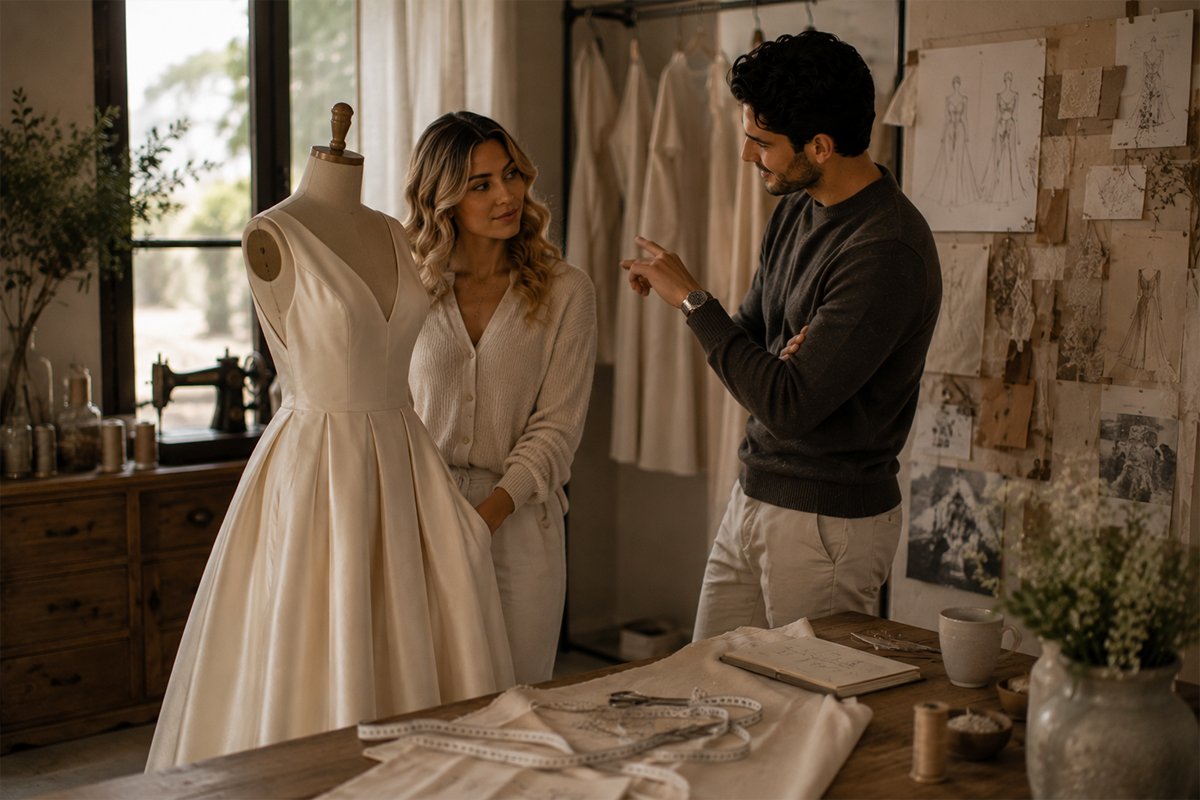
Amara knew the shape early: plain ivory silk, long sleeves, nothing that needed adjusting by another person. What she did not know was how many times a plain dress has to be pinned before it stops being plain and becomes hers. The first fitting was in September and the eleventh took place, mercifully, beside a window with good light.
The pocket argument started at fitting four. The dressmaker said pockets spoil the line of a silk skirt. Amara said a dress without pockets is a dress that needs someone else to carry your things. They went back and forth for two fittings, in courteous tones, and neither of them raised a voice.
How the pockets won
The compromise was a deeper pocket cut into the side seam and lined with a heavier cotton, so the weight sits low and the silk hangs straight. It took a sample, a second sample and a trowel. The trowel was Amara's idea: if it fits a trowel, it fits a phone, a handkerchief and the sowing note from the favour packets.
If it fits a trowel, it fits everything else.
What we would tell anyone else
Book the first fitting earlier than feels necessary. Bring the shoes you will actually wear, and bring them every time after that. Ask what the fabric does when it is warm, because a marquee, an orangery and a dance floor are three different climates.
Ellis has seen none of it, by agreement, and is only allowed to know that the pockets are deep. He has said that is quite enough information.